Apple M4 chip: how to verify yours is genuine
Verifying a used M4 Mac is mostly four checks: About This Mac plus system_profiler for the chip line, Apple Diagnostics for PPR/PPM/PFR codes, the Parts & Service pane for a Genuine logic board, and recognizing the AST 2 report offers that are always fraudulent.

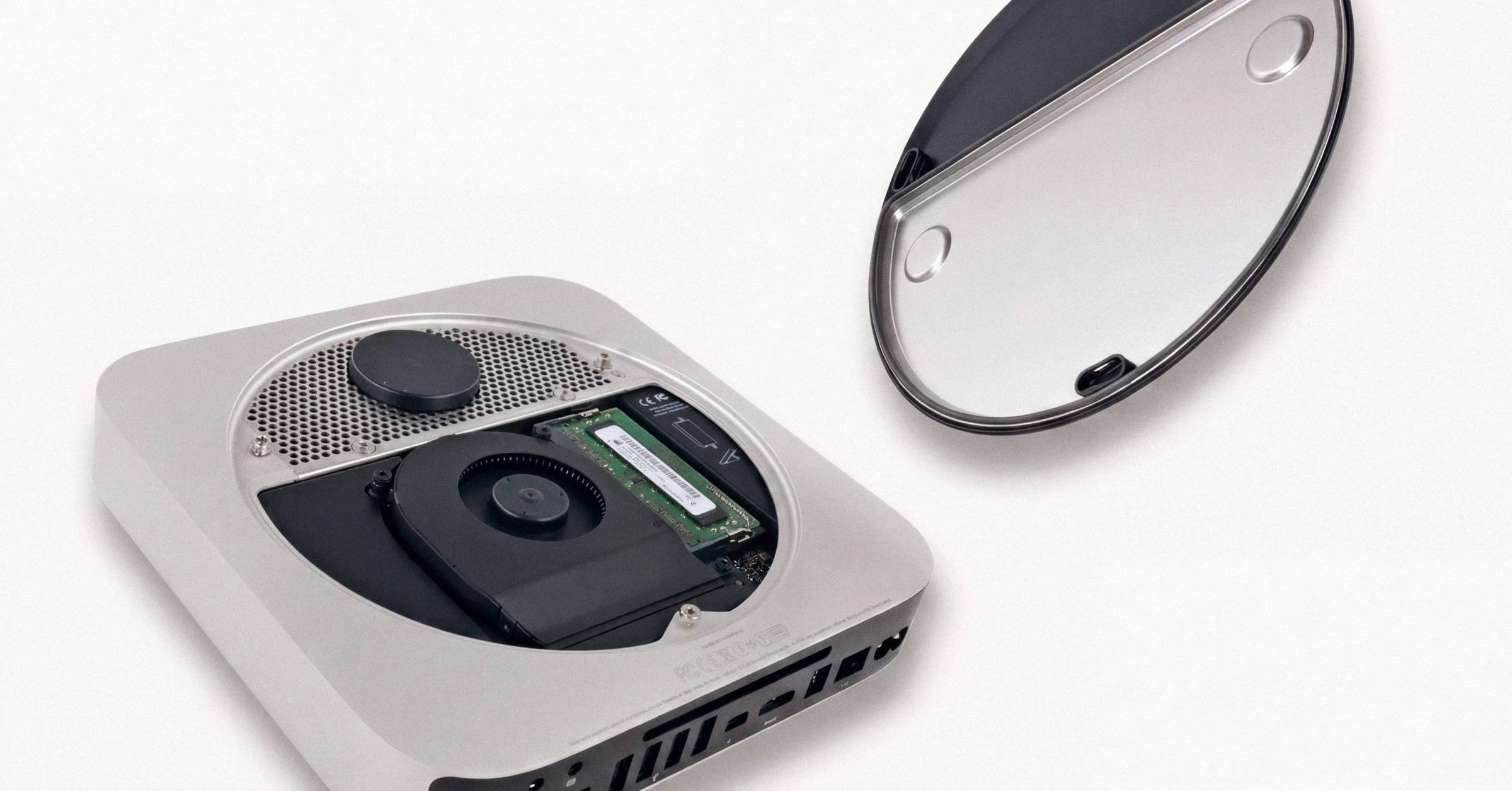
Apple M4 chip: how to verify yours is genuine#
Verifying that a used M4 Mac actually contains an M4 is mostly four checks. About This Mac shows the chip line, Apple Diagnostics rules out silicon-level faults, the Parts & Service pane on macOS Tahoe 26 confirms the logic board is Genuine, and recognizing the fraudulent "AST 2 report" offers defeats the social-engineering attack that targets exactly this question.
None of the four requires paid software. All four run on the device itself, in roughly fifteen minutes, before money moves on a private-sale transaction.
Check 1: About This Mac shows the marketing model and chip line#
Apple menu → About This Mac. The window shows the marketing model (MacBook Pro, MacBook Air, Mac mini, Mac Studio, iMac, Mac Pro) and the chip line (Apple M4, Apple M4 Pro, Apple M4 Max). Click "More Info" to land in System Settings → General → About, which shows the same data plus the serial number and total memory.
For scripted or repeatable verification:
system_profiler SPHardwareDataType
Returns the same data in text alongside the Model Identifier (e.g., Mac15,11). The Model Identifier maps one-to-one to a specific marketing model, and Apple's published mapping is the authoritative cross-reference. If About This Mac says "Apple M4 Pro" but the Model Identifier corresponds to a Mac mini M2, the unit has had a chassis swap or the seller is reading a script someone else handed them.
Check 2: Apple Diagnostics returns ADP000#
The Apple Silicon invocation: shut down, press and hold the power button (Touch ID on laptops) past the Apple logo, release when the startup-options window appears, then press and hold Command-D. The full procedural walkthrough is in the Apple Silicon and Intel Apple Diagnostics startup guide.
A clean run returns the reference code ADP000 ("No issues found"). On an M4 Mac, the codes that mean silicon-level faults are:
- PPR001: processor.
- PPM001 through PPM016: onboard (soldered) memory.
- PFR001: firmware.
Any of those on a soldered-memory M4 means logic-board replacement, which is expensive. Treat them as a "do not buy" on a used unit unless the seller is pricing accordingly.
Run the test two or three times before concluding a failure. Intermittent codes are common, and the procedure to disconnect external USB and Thunderbolt peripherals first matters: external devices are the most common source of false NDD001 (USB) and NDT codes on test runs.
Check 3: Parts & Service on macOS Tahoe 26 shows Genuine#
Parts & Service is the dynamic pane Apple added in macOS Tahoe 26 to surface logic-board, Touch ID, and display-assembly provenance. The path is System Settings → General → About → Parts & Service.
It is Apple Silicon only and requires macOS Tahoe 26 or later. The pane appears dynamically: only if the Mac detects that a tracked component was repaired or replaced. On a Mac that has never been serviced, the pane is empty (or absent entirely), and that is a passing signal.
Tracked components by model:
- MacBook Pro and MacBook Air: logic board, Touch ID board, lid angle sensor (M5 models only).
- MacBook Neo: logic board, Touch ID board, display assembly.
- iMac, Mac mini, Mac Studio, Mac Pro: logic board only.
For an M4 Mac, the relevant entry is the logic board. The labels you can see:
| Label | What it means |
|---|---|
| Genuine | Authentic Apple part with completed cryptographic handshake and calibration. |
| Used | Authentic Apple part harvested from a donor Mac. Functions normally but recognized as migrated. |
| Unknown | Validation failure: third-party clone, malfunctioning, modified, or installed without completing calibration. Triggers a persistent lock-screen notification for five days. |
| Unverified | Logic-board-specific case where the board was replaced but cannot be verified. May impact security-dependent features such as Apple Pay. |
| Finish Repair | Repair is incomplete because final calibration was not run. |
Unknown or Unverified on the logic board of a "genuine M4" listing is the single largest red flag the pane surfaces. The buyer-side advice is straightforward: walk away, or price accordingly with the understanding that the security-dependent features the board hands to the Secure Enclave may be compromised.
One caveat: if SIP (System Integrity Protection) is disabled, macOS automatically disables the Parts & Service pane. Developers running custom kernel drivers sometimes turn SIP off. If the seller's machine has SIP off, you cannot use this check on it. Reboot, re-enable SIP, then check.
Check 4: "AST 2 reports" sold online are fraudulent#
This is the social-engineering attack that targets exactly the "is my M4 genuine" question. Multiple third-party sites and individual sellers offer "AST 2 diagnostic reports" or "AST 2 verification" for a fee, promising remote authentication.
Apple Service Toolkit 2 (AST 2) is the technician-only diagnostic platform Apple delivers from a "Diagnostic Console" web app on a technician's Mac or iPad. It pushes the appropriate diagnostic image to the customer's device wirelessly (via NetBoot or cloud-EFI) and reports results into GSX's Global Diagnostic Exchange (GDX). Its central engine is the Mac Resource Inspector (MRI), which queries every component on the PCI/PCIe, I²C, and USB buses to verify physical presence, firmware integrity, and core electrical health.
AST 2 access requires authentication into Apple's GSX portal. GSX access requires being an Apple Authorized Service Provider, an Independent Repair Provider, or Apple itself. There is no consumer path. No remote service can run AST 2 on your Mac.
Any third party offering an "AST 2 diagnostic report" on an M4 Mac without an Apple Store or AASP visit is doing one of three things:
- Misrepresenting ordinary Apple Diagnostics output. Apple Diagnostics is the one you can run yourself for free, and it does not produce an "AST 2 report."
- Scraping Apple's public Coverage Check (checkcoverage.apple.com) and reformatting the response.
- Fully fraudulent: invented data, photoshopped screenshots, or both.
The genuine end-user equivalent is Apple's Self Service Repair portal, which runs the same Apple Diagnostics image you can already invoke locally. It does not grant AST 2 access. Anyone offering "AST 2" outside of an Apple Store or AASP visit is operating outside Apple's actual repair architecture.
After a logic-board replacement: how the calibration handshake works#
After any logic-board replacement on Apple Silicon, the part's unique identifier is cryptographically paired with the Secure Enclave and logic board via Apple's calibration servers, and a final MRI sweep registers the calibration as successful. The Parts & Service status reflects the outcome: a clean handshake flips Finish Repair to Genuine.
On an M4 unit that has been through authorized service, the pane is the right place to verify the work completed cleanly. A status of Finish Repair means the technician started the repair but did not complete final calibration, which leaves Touch ID, True Tone, and other calibration-dependent features disabled until Repair Assistant finishes the work.
If the unit you are looking at says Finish Repair on the logic board, that is not a fake-M4 signal but it is an incomplete-repair signal. The work is not done.
What this means for the reader#
Verifying a used M4 Mac does not require expensive software, third-party "verification services," or a trip to an Apple Store. About This Mac plus Apple Diagnostics plus Parts & Service covers the device-side check completely. The pattern-recognition piece is recognizing the AST 2 scam, which preys on owners who do not know that AST 2 is technician-only.
Run all four checks in person before paying. About This Mac and system_profiler take thirty seconds. Apple Diagnostics takes five minutes. Parts & Service is one menu click. The fraud filter is one sentence: nobody can sell you an AST 2 report.
For the larger picture, the Macfax Basic check stack for an M4 Mac covers the same identity, SSD-wear, battery, and tamper checks packaged into a device-bound, shareable record that survives the screenshot-fabrication problem. The pillar Mac diagnostics reference for 2026 covers the broader workflow this check fits into, and the Coverage Check vs Self Service Repair walkthrough covers the two free Apple-provided tools the AST 2 scammers misrepresent.
Buying a Mac? Every listing on the Macfax shelf shows the exact configuration and an asking price in the open, with a signed report where the seller ran the checks.
Related posts
Mac diagnostics: the complete 2026 guide
Apple Diagnostics is the only Apple-sanctioned hardware test built into every Mac since 2013, and a clean run returns reference code ADP000. This is the full 2026 guide: how to run it, the technician-only stack that isn't accessible to you, and the third-party tools (CoconutBattery, smartctl, DriveDx, EtreCheck) that fill the gaps Apple deliberately hides.
How to use Apple Diagnostics: invocation, ADP000, and what to do next
Apple Diagnostics returns one of two things: ADP000 (no issues found) or a three-letter-plus-three-digit code. ADP000 is shallow by design. Here's how to read the result, when to rerun, and which third-party tool fills which gap.
How to run diagnostics on a Mac: every method compared
There are five consumer-accessible ways to test a Mac's hardware health (Apple Diagnostics, CoconutBattery, smartctl, DriveDx, EtreCheck) and one technician-only stack you cannot run yourself. Each answers a different question. Running one is not running all five.
Written by
Marcus WilliamsMarcus Williams covers Mac hardware and repair for Macfax. He spent six years on the bench at an Apple Authorized Service Provider in the Pacific Northwest before going independent, most of that time on logic-board repair, display assembly swaps, and the failure patterns Apple's diagnostics don't surface. He writes about what's inside a Mac, what breaks first, and what a serial number can and can't tell you about a unit's history.
More posts by Marcus →