The 512GB M3 Ultra Mac Studio: a discontinued-capability premium
The 512GB M3 Ultra Mac Studio was discontinued in March 2026. Verified secondary sales now clear from $9,500 sealed to over $21,000, because no other consumer machine can hold a frontier-class local LLM in one box.

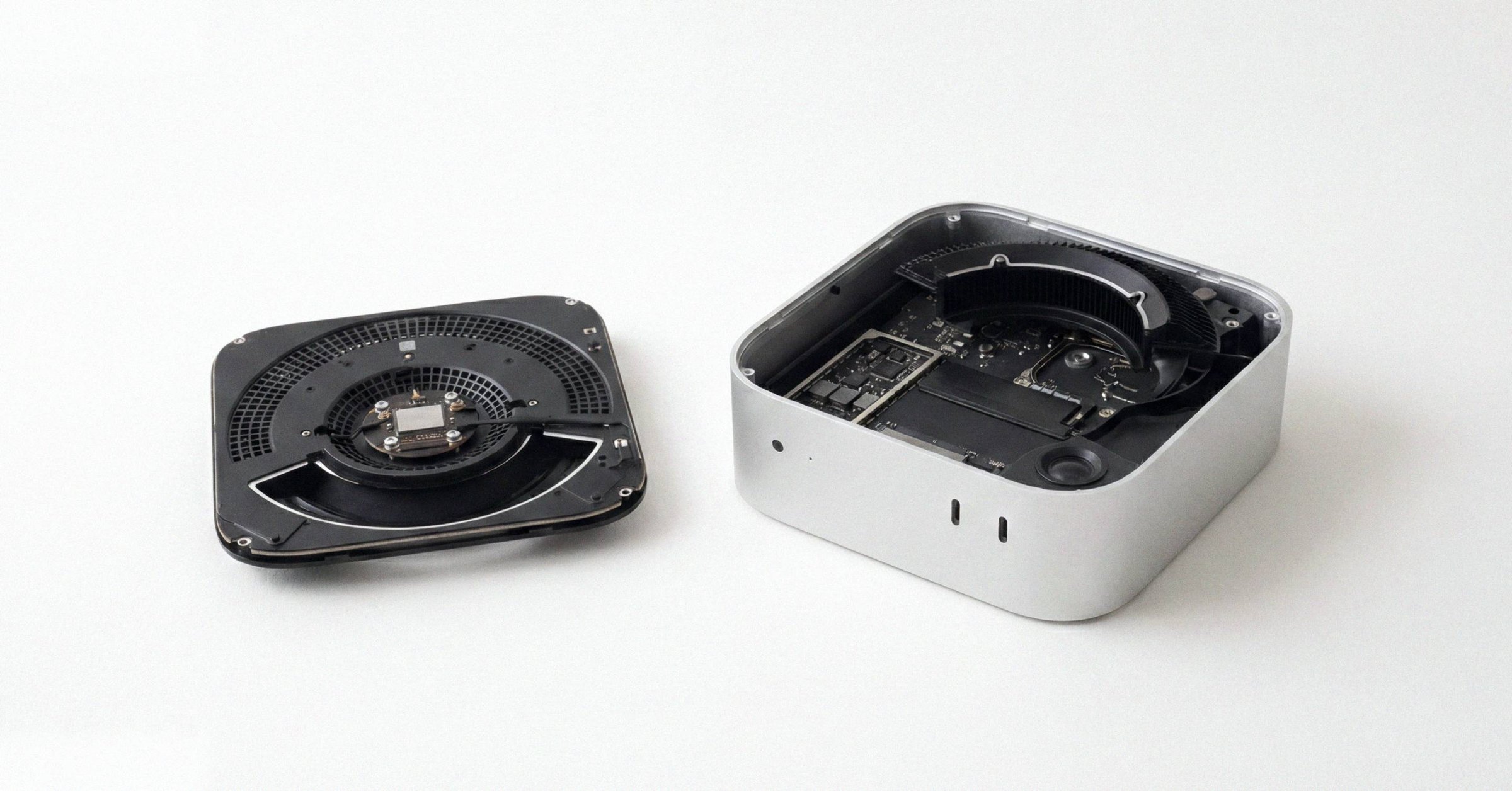
The 512GB unified-memory M3 Ultra Mac Studio was discontinued on March 5, 2026, after about a year on sale. Verified secondary-market sales since: $9,500 to $11,500 for sealed-new 1TB-SSD units, with documented eBay closed sales as high as $17,199 and $21,300. The original MSRP for that configuration was $9,499.
For a one-year-old Apple Silicon machine, this is not a normal depreciation curve. It is an inversion. And the reason is that the 512GB M3 Ultra is currently the only consumer-tier computer that can hold a frontier-class local LLM in one box without sharding across multiple accelerators. The broader used Mac aftermarket reference covers the wider 2026 pricing context.
The discontinuation#
On March 5 to 6, 2026, Apple removed the 512GB unified-memory upgrade option from the M3 Ultra Mac Studio configurator, citing DRAM scarcity (MacRumors, Tom's Hardware, AppleInsider).
Apple originally marketed the M3 Ultra at launch in March 2025 as supporting up to 512GB unified memory. The current tech specs now cap M3 Ultra at 256GB. The same M3 Ultra silicon, the same Mac Studio chassis, a capability tier removed from the order page.
The pre-discontinuation pricing was:
| Configuration | MSRP |
|---|---|
| M3 Ultra 32-core CPU / 80-core GPU / 256GB / 2TB | ~$5,599 |
| M3 Ultra 32-core / 80-core GPU / 512GB / 1TB | $9,499 |
| M3 Ultra 32-core / 80-core GPU / 512GB / 4TB | ~$10,499 |
| M3 Ultra 32-core / 80-core GPU / 512GB / 8TB | $13,499 to $14,099 |
The $4,000 jump from 256GB to 512GB was Apple's largest single RAM upgrade premium on any current Mac. That premium is what the secondary market is now repricing.
Secondary-market data, January to May 2026#
The market on the 512GB M3 Ultra has been extreme and dispersed, reflecting a thin, illiquid segment with high variance. Documented data points:
- Sealed-new 512GB / 1TB units clearing $9,500 to $11,500 on eBay, with confirmed sales in April 2026.
- 512GB / 4TB units selling around $10,500 to $12,500 (February 2026 confirmed sale).
- 512GB / 8TB units selling around $12,000 to $14,500 sealed. Excellent-used listings $11,000 to $13,500 in May 2026.
- An r/hardwareswap thread asking $17,000 shipped for a 512GB / 1TB; seller reported it ultimately sold on eBay. An ended eBay listing for a 512GB / 8TB at $17,199.
- One eBay closed sale at $21,300 (Reddit r/MacStudio thread).
- An r/AppleSwap listing for a sealed 512GB / 4TB asking $27,000.
- A new 512GB unit with a fixed-price listing at $27,900 with Best Offer accepted (final price below that ceiling but unknown).
A defensible reading of the dispersion: the floor on a verifiable sealed 512GB M3 Ultra is at or slightly above original MSRP, in the $9,500 to $11,500 range. The ceiling runs anywhere from $14,000 to over $20,000 in the thinnest, most workload-driven corners of the market. The premium is real, large, and measured in many thousands of dollars. The exact magnitude is volatile.
For comparison, the same M3 Ultra chip at 256GB sells used for $5,200 to $6,800 against an MSRP of $5,599 or so. The non-discontinued Mac Studio resale snapshot from M1 Max through M3 Ultra covers the rest of the lineup. That is roughly $4,500 to $13,000 of premium on the 512GB tier alone, sitting on top of an already-firm 256GB market.
Why this is happening: unified memory and the 400B-parameter wall#
Unified memory architecture means the M3 Ultra GPU can address the entire 512GB RAM pool as if it were dedicated GPU memory. There is no discrete VRAM and no PCIe transfer bottleneck between system RAM and GPU. Whatever the model needs to load, the GPU can read directly.
For local inference, that one architectural fact crosses a meaningful capability threshold. The largest open-weight models published in 2025 sit between 200B and 600B parameters. At 4-bit quantization, model weights compress to roughly 0.5GB per billion parameters, so:
- A 200B model (Qwen3-235B at INT4) needs ~120GB. Fits comfortably in 256GB.
- A 400B-class model (Llama 3.1 405B at INT4, GLM 5, Mistral Large 3 at 4-bit) needs ~200 to 250GB before context window overhead.
- A 600B+ model (DeepSeek-V3.2 at FP8 or Q5_K_M) needs ~340 to 450GB.
For the 400B and 600B tiers, 256GB is not enough. You can shard the model across multiple GPUs, but you cannot fit it on a 256GB machine. The 512GB M3 Ultra is the only sub-$15,000 platform on which you can run those models in a single box without quantization-driven reasoning degradation.
The closest equivalent in the broader ecosystem is a chained rack of enterprise Nvidia accelerators. Eight Nvidia H200 (141GB each) or four B200 (192GB each) reach the memory footprint, but the capital outlay is at minimum $120,000 for the cards alone, before counting NVLink switches, server chassis, power infrastructure, and cooling. A B200 platform is comfortably six figures.
The EXO clustering framework's own documentation explicitly recommends a single Mac Studio 512GB as a viable single-node configuration for distributed inference. This is the workload that anchors the premium.
What this is, and what it is not#
This is a discontinued-capability premium. Buyers are paying above MSRP to replace a capability tier Apple no longer sells. It is structural, not sentimental.
It is not a collector premium. The market does not pay extra for an in-box, factory-sealed display piece; it pays for compute that can hold a 400B-parameter model.
It is not an upgrade-recapture premium. The original buyer paid $4,000 to step from 256GB to 512GB; secondary buyers are paying multiples of that incremental cost. The premium is not about reimbursing Apple's original BTO charge; it is about replacing a discontinued SKU.
The same dynamic shows up in two other corners of the May 2026 market:
- The base M4 Mac mini at $599 is trading well above retail, because Apple removed the 256GB SSD base tier and supply has been intermittent. The mechanism is identical in shape, smaller in magnitude.
- The 2019 Intel Mac Pro with 1.5TB ECC RAM and eight PCIe slots clears $3,500 to $6,500 against an original Apple Trade In cap of about $800. Most Intel-era Macs have collapsed; the 1.5TB Mac Pro is the exception, because no Apple Silicon machine offers expandable DDR4 ECC or PCIe expansion. A tiny audience of audio, video, and FPGA workflows keeps the chassis alive.
In each case, Apple has removed a capability rather than replacing it with a strict successor, and the secondary market has repriced upward.
Reinforcing factors#
Three reinforcing pressures keep the 512GB premium where it is:
- Apple's stated supply timelines for any 256GB+ Mac Studio configuration extend six to ten weeks into mid-2026. Buyers who cannot wait pay the secondary-market premium.
- The rumored M5 Ultra Mac Studio refresh (expected fall 2026) is widely projected to cap at 256GB RAM, given ongoing DRAM constraints. If that holds, the 512GB M3 Ultra remains the highest-memory Apple Silicon Mac for an extended period. This part is forward-looking; treat as informed speculation rather than confirmed fact.
- Apple's CEO told investors on the Q2 FY2026 earnings call that the Mac mini and Mac Studio may take several months to reach supply-demand balance. That sets secondary-market expectations of persistent scarcity.
Risks to the premium#
The 512GB M3 Ultra premium is not guaranteed to persist. Three scenarios that compress it:
- DRAM contract prices stabilize and Apple resumes selling 512GB+ Studios. This is the cleanest reversal mechanism. If LPDDR5X contract prices return to early-2025 levels, the structural reason for the discontinuation evaporates.
- The M5 Ultra refresh ships with a 384GB or 512GB ceiling rather than the rumored 256GB. The 512GB M3 Ultra premium then collapses to a generation-old discount, on the order of a normal 20 to 30% depreciation.
- Local inference shifts to purpose-built accelerators (Groq, Cerebras, custom silicon) that price Apple Silicon out of the AI workload. The premium then evaporates from the demand side rather than the supply side.
None of the three is happening this quarter. All three are plausible on a six to eighteen month horizon. The premium is currently load-bearing on the absence of all three.
What this means for buyers and sellers#
If you own a 512GB M3 Ultra Mac Studio and you do not need it for local inference, this is an unusually favorable selling window. Verified completed eBay sales are clearing at or above the original $9,499 MSRP. Sometimes well above. A patient seller on eBay or r/AppleSwap can reasonably expect $10,000 to $12,000 for a clean 1TB-SSD unit, and the upper tail is genuinely $15,000+ for high-SSD configurations. The venue tradeoffs between Swappa, eBay, and r/AppleSwap cover where to list.
If you are buying for AI workloads, do the cost-of-capability math the same way you would on a Nvidia rack. The 512GB Mac Studio at $12,000 to $18,000 is, in May 2026, the cheapest way to host a 400B-class model end to end. The next tier up is six figures of enterprise GPU silicon plus the infrastructure to run it. Even paying nearly double MSRP is still cheaper per gigabyte of unified memory than the alternative.
If you are buying to flip, the same thinness that creates the upside creates the risk. A single seller arrival, a stabilizing DRAM contract, an M5 refresh announcement, or a competing accelerator launch can compress the premium meaningfully and quickly. The market is too thin to absorb shocks gracefully.
For everyone else, the takeaway is narrower: when Apple removes a capability tier rather than replacing it, the secondary market reprices upward, and the size of the reprice depends on whether a unique-capability gap is created. The 512GB M3 Ultra hits the wall at exactly the model size where the rest of the ecosystem requires enterprise hardware. That intersection is what pays for the premium.
Wondering what a Mac is worth right now? See live asking prices for the exact configuration, next to what Apple's trade-in offers.
Related posts
Mac Studio M3 Ultra trade-in vs eBay: a $4,000 channel spread
Mac Studio M3 Ultra 256/2TB pulls roughly $2,400 from Apple Trade In and $5,200 to $6,800 from eBay sold listings in 2026. Here is why the channel spread is the widest on any Mac sold today.
The 2026 MacBook RAM exception: high-memory Macs are holding value
Is the MacBook Pro RAM upgrade worth it in 2026? Yes, more than usual. The DRAM shortage has inverted the depreciation curve on 64GB and 128GB units, which now recover at 60 to 100 percent versus the historical 30 to 50. SSD upgrades have not.
MacBook buyback in 2026: specialist Mac buyers vs Gazelle and Decluttr
MacBook buyback rates in 2026: Gazelle and Decluttr pay 10 to 40 percent above Apple Trade In. Specialist Mac buyers like SellMac and OWC pay 20 to 40 percent more. Here is the May 2026 head-to-head with payout structure.
Written by
Priya PatelPriya Patel covers the used-Mac market for Macfax. Before joining she spent six years as a power-seller on eBay, moving roughly 1,200 Macs through the platform and building a private dataset of sale-price-vs-listing-price across every Mac SKU back to 2017. She writes about pricing, buyer and seller behavior across the major marketplaces, and where the secondary market actually clears versus where it's listed.
More posts by Priya →