MacBook Air resale value in 2026: prices for every M-series generation
MacBook Air resale value across M1, M2, M3, and M4 in May 2026. M4 retains 79 to 94 percent of MSRP because the M5 kept the $999 base price but dropped 8GB RAM. Channel comparisons and the patterns that move the number.

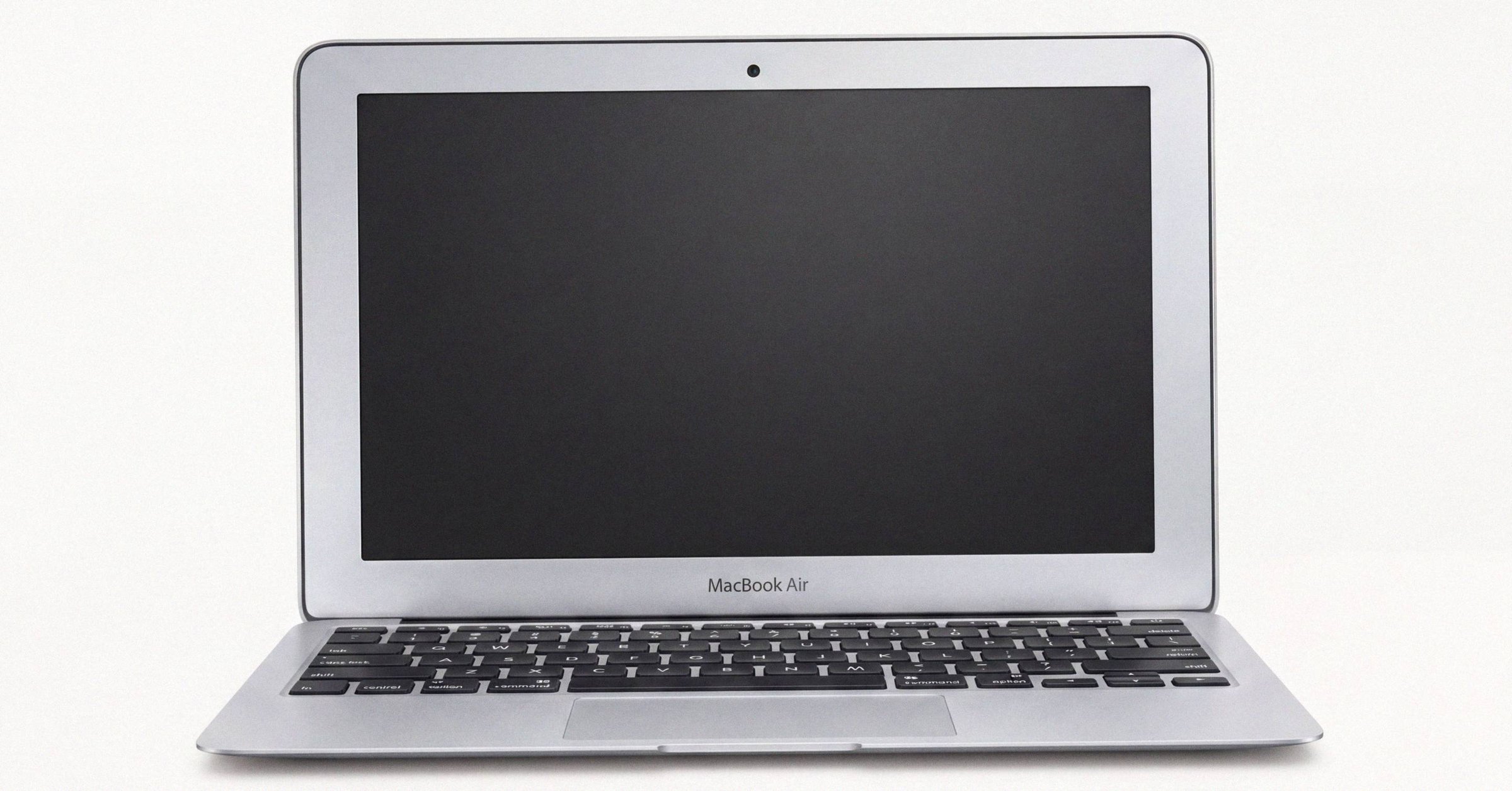
MacBook Air resale value in 2026: prices for every M-series generation#
MacBook Air resale value in May 2026 ranges from about $349 on the base 13-inch M1 (which originally shipped at $999) to $943 on the 13-inch M4 with 512GB SSD (which still ships at $999). That M4 retention number, roughly 94 percent on a one-year-old consumer laptop, is essentially unprecedented in the category and is the headline of this snapshot.
This piece walks through the full Apple Silicon MacBook Air lineup as it stands in May 2026, with the channel comparisons that determine how much cash actually lands in a seller's account. For the broader used Mac market reference across every model family, the pillar piece covers the full set.
The pricing snapshot#
All figures below combine Swappa average-sale data, eBay sold-listing ranges for "good" to "excellent" condition, and Apple Trade In maximum payouts. Source: Swappa MacBook Air 2020, Swappa MacBook Air 2022 (M2) 13", Swappa MacBook Air 2025 (M4) 15".
| Model | MSRP | Used market (May 2026) | Apple Trade In max | % retained |
|---|---|---|---|---|
| M1 13" 8/256 (Nov 2020) | $999 | $349 to $485 avg; eBay $450 to $600 (8/256), $650 to $750 (16/512) | $190 | 35 to 50% |
| M2 13" 8/256 (Jul 2022) | $1,199 | $526 avg (256GB), $616 (512GB), $835 (2TB) | $300 | 44 to 55% |
| M2 15" (Jun 2023) | $1,299 | ~$660 avg; eBay $580 to $750 | $360 | 50 to 58% |
| M3 13" (Mar 2024) | $1,099 | ~$720 avg | $400 | 64 to 72% |
| M3 15" (Mar 2024) | $1,299 | ~$800 avg | $470 | 57 to 69% |
| M4 13" (Mar 2025) | $999 | ~$790 (256GB), $943 (512GB) | $470 | 79 to 94% |
| M4 15" (Mar 2025) | $1,199 | $879 (256GB), $1,051 (512GB), $1,330 (1TB) | $530 | 71 to 88% |
The percentages span a range because there are two divergent benchmarks for each row: the average verified Swappa sale and the higher end of eBay sold-listing prices for the same configuration in "excellent" cosmetic grade. A clean-cosmetic eBay sale typically clears 10 to 20 percent above the Swappa average for the same SKU.
The M4 retention anomaly#
The standout line in the table is the 13-inch M4 with 512GB. It is a one-year-old machine clearing at roughly 94 percent of its original $1,199 retail price. For context, the historical Apple Silicon depreciation curve puts a 12-month MacBook around 78 percent retained. The M4 is running about 16 percentage points above the curve.
Three reinforcing factors produce that result.
The successor M5 MacBook Air shipped at the same $999 base price as the M4. Apple normally either lowers the entry price of a new generation or holds it flat while adding capability. Here, the price held flat but the 8GB base RAM option went away. M-series MacBook Airs now start at 16GB. A used M4 with 16GB therefore competes against a new M5 with the same RAM at the same $999, and the M4 is only marginally slower for the workloads that drive Air demand: web, mail, document editing, light photo work.
DRAM and NAND component costs are up roughly 130 percent year-over-year, driven by HBM fabrication capacity being reallocated to AI accelerators. Some LPDDR5X chip contract prices have roughly tripled versus early 2025 (AppleInsider). That inflation has not flowed into Apple's M5 Air retail price (the $999 base held), but it has put a firm floor under what Apple can charge for new units, which in turn keeps used M4 prices from collapsing. The full mechanism is covered in the 2026 RAM exception breakdown on high-memory recovery.
The 256GB to 512GB SSD step is genuinely meaningful on the M4 Air. The $200 upgrade at retail recovers nearly its full value at resale, which is unusual. Most internal-storage upgrades on Macs decay poorly because external Thunderbolt SSDs do roughly the same job for less. On a sealed Air without expansion options visible to a typical buyer, the 512GB tier reads as a meaningful capability bump rather than as a buyable-elsewhere extra.
The 2020 chassis still prices the chip#
The 13-inch MacBook Air housed Intel i3, Intel i5, and the original M1 in the same outer shell. Five years later, the secondary market is still pricing the silicon rather than the enclosure age.
- M1, 8GB RAM, 256GB SSD: $349 average sale
- Intel i5, 8/256: $292 average sale
- Intel i3, 8/256: $253 average sale
The spread from i3 to M1 is roughly 38 percent on identical-looking hardware. The mechanism is simple: Apple Silicon delivers materially better performance per watt and is still receiving macOS updates, while the Intel models are approaching the end of their guaranteed update window. Buyers know the difference and pay for it.
This is also a useful sanity check on listings. If someone is selling a "2020 MacBook Air" at $300 without specifying the chip, the price hints that it is Intel. M1 listings near $300 in good cosmetic condition are typically scams or stolen-device listings.
The M2 storage inversion#
The 13-inch M2 at 1TB shows a small but consistent anomaly in the Swappa data: verified sale prices for the configuration are clearing above the median listing's starting ask. That inversion is not present on the 256GB, 512GB, or 2TB variants of the same machine.
The most likely explanation is localized scarcity at the mid-tier storage point. Buyers shopping for a used Air with more than 256GB but not paying for a top-tier 2TB SKU find genuine alternatives thin on the ground: most M2 Airs originally shipped at 256GB or 512GB, and the 1TB BTO step was less common at retail. Sellers list at "market" Swappa prices but buyers will go above ask to lock in a configuration that is otherwise hard to find without waiting weeks.
For sellers with an M2 13" at 1TB, the practical implication is to list at the upper end of comparable sold listings rather than undercutting the Swappa average.
Channel selection on an Air#
The MacBook Air is the most liquid segment of the Mac aftermarket. Channel spreads are narrower than on Pro-tier machines, but Apple Trade In is still the lowest-paying option by a wide margin. The direct head-to-head between Apple Trade In and eBay covers the math.
For the 13-inch M2 8/256 as a representative case:
| Channel | Approximate payout (May 2026) |
|---|---|
| Apple Trade In | $300 (Apple gift card credit only) |
| Best Buy trade-in | $270 |
| Decluttr / Gazelle | $370 to $420 |
| Specialist Mac buyers (SellMac, ItsWorthMore) | $400 to $460 |
| Swappa net to seller | $470 to $530 |
| eBay net after fees | $475 to $555 |
| Reddit r/AppleSwap net | $500 to $580 |
The Apple Trade In to peer-to-peer spread is 60 to 90 percent on a typical Air. Apple's stated policy is that exact trade-in values depend on model, configuration, and condition, with a serial number required for an accurate quote (Apple Trade In). The published category caps are upper bounds that many devices do not qualify for after inspection.
For sellers without a built-up Reddit karma history, Swappa is typically the right floor. eBay nets slightly more on average but introduces fee complexity and a longer buyer-protection tail. Reddit r/AppleSwap is the best net margin for sellers with established reputation, in exchange for accepting no platform protection. The Swappa-vs-eBay-vs-r/AppleSwap comparison on the same machine walks through each venue.
What this means if you are pricing one#
For an M1 or M2 Air in good cosmetic condition with reasonable battery health, the realistic peer-to-peer price is the Swappa average plus 5 to 10 percent if cosmetic condition is genuinely "excellent" and battery cycles are under 300. The Apple Trade In number is a floor reference, not a target. The buyback services sit roughly halfway between those two.
For an M3 or M4 Air, prices are firmer than the historical curve would predict, which is favorable to sellers and difficult for buyers. If you are buying, the M3 13" is the current value sweet spot in the Air lineup: meaningfully cheaper than a new M5 while still receiving full macOS support and within one generation of current performance.
Battery cycle count materially moves the number on any of these. Under 300 cycles is "excellent" and adds 5 to 10 percent. Over 800 cycles reduces value by 10 to 20 percent regardless of cosmetic condition. Buyers reading System Information are looking at that number first; the MacBook battery diagnostic walkthrough covers what every value in that panel actually means.
The configurations to avoid as a buyer, in any generation: 8GB RAM and 256GB SSD together. The combination is now functionally obsolete for any sustained modern workflow and the used market reflects it. A 16GB or 24GB model with 512GB or more holds value better in percentage terms and is materially more useful day to day.
Wondering what a Mac is worth right now? See live asking prices for the exact configuration, next to what Apple's trade-in offers.
Related posts
The 512GB M3 Ultra Mac Studio: a discontinued-capability premium
The 512GB M3 Ultra Mac Studio was discontinued in March 2026. Verified secondary sales now clear from $9,500 sealed to over $21,000, because no other consumer machine can hold a frontier-class local LLM in one box.
The 2026 MacBook RAM exception: high-memory Macs are holding value
Is the MacBook Pro RAM upgrade worth it in 2026? Yes, more than usual. The DRAM shortage has inverted the depreciation curve on 64GB and 128GB units, which now recover at 60 to 100 percent versus the historical 30 to 50. SSD upgrades have not.
MacBook buyback in 2026: specialist Mac buyers vs Gazelle and Decluttr
MacBook buyback rates in 2026: Gazelle and Decluttr pay 10 to 40 percent above Apple Trade In. Specialist Mac buyers like SellMac and OWC pay 20 to 40 percent more. Here is the May 2026 head-to-head with payout structure.
Written by
Priya PatelPriya Patel covers the used-Mac market for Macfax. Before joining she spent six years as a power-seller on eBay, moving roughly 1,200 Macs through the platform and building a private dataset of sale-price-vs-listing-price across every Mac SKU back to 2017. She writes about pricing, buyer and seller behavior across the major marketplaces, and where the secondary market actually clears versus where it's listed.
More posts by Priya →