Apple repair history on a Mac: GSX, Parts & Service, and what owners can actually see
Apple repair history on a Mac lives in three places: GSX (Apple's internal database, locked to authorized partners), the macOS Tahoe Parts & Service pane, and third-party invoices. The owner sees the smallest slice.

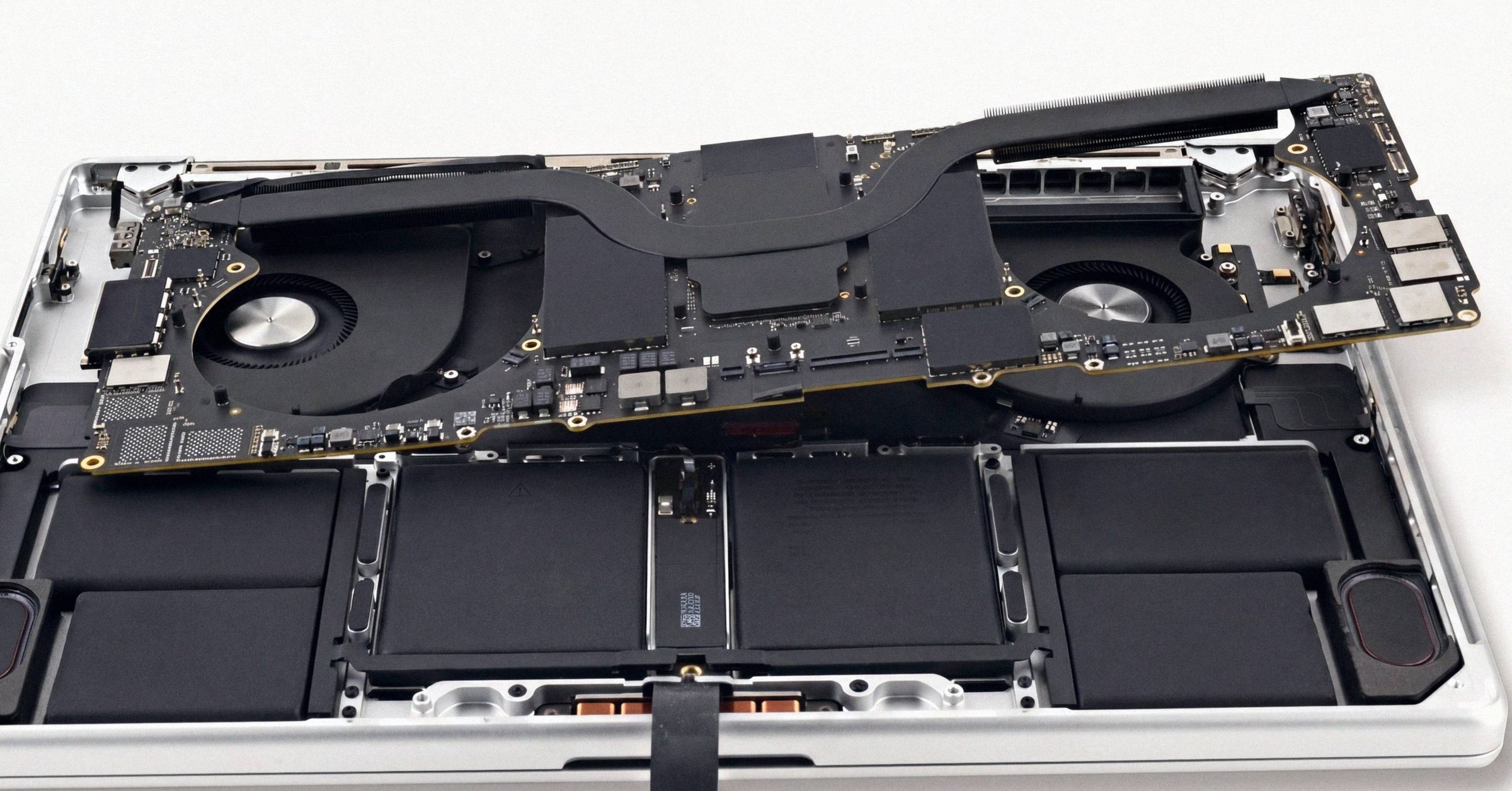
Apple repair history on a Mac lives in three overlapping but unequal repositories. Apple's internal GSX database holds everything. The macOS Tahoe Parts & Service pane holds a small but useful subset. Third-party invoices from independent shops hold whatever the shop chose to record. The structural problem is the order of access: Apple sees the most, the device's current owner sees a fraction, and the prospective second-hand buyer, the person for whom accurate repair history matters most economically, typically sees the least.
This is the complete reference. It covers what "genuine Apple parts" actually means on a Mac, the four channels through which Apple distributes parts and service, the GSX database and why Apple keeps it locked, the macOS Tahoe Parts & Service pane and exactly what it does and does not track, and the legal landscape in 2026.
What "genuine Apple parts" means on a Mac#
Apple uses the phrase as a term of art with two interlocking definitions: a sourcing definition (where the part came from) and a technical definition (how the part is cryptographically tied to a specific Mac).
The sourcing definition. Apple distributes genuine parts through five official channels:
- Apple Stores and Apple Repair Centers.
- Apple Authorized Service Providers (AASPs).
- Independent Repair Providers (IRPs), under Apple's IRP program.
- Self-Servicing Accounts (SSAs) for institutions with at least 1,000 Apple devices.
- Self Service Repair (SSR), for end users buying parts directly, under Apple's Self Service Repair program.
In May 2025, Apple added a sixth path: the Genuine Parts Distributor program, which lets unaffiliated shops order genuine parts through distributors such as MobileSentrix and Mobileparts.shop. The Mac SKU coverage is narrower than iPhone and iPad and currently limited to selected MacBook Pro/Air, iMac, Mac mini, Mac Studio, and display models.
The technical definition. Every genuine Apple part is individually calibrated, with data uploaded to Apple's servers at the time of manufacture. Modern Mac components contain microcontrollers that store encrypted serial numbers. At boot, the main system firmware queries those sub-processors and verifies their cryptographic signatures against the hardware profile stored in the Secure Enclave. If a signature mismatch is detected, the operating system limits or disables the affected feature.
Mac vs. iPhone parts pairing#
iPhones have the more developed pairing regime. Since the iPhone XS and especially from the iPhone 12 onward, Apple has serialized and paired displays, batteries, cameras, Face ID and Touch ID modules, LiDAR assemblies, and other components to the logic board. Swapping in a genuine but harvested or aftermarket part typically triggers an "Unknown Part," "Unverified," or "Important Battery Message" notification and can disable True Tone, auto-brightness, battery-health reporting, or Face ID until Apple's System Configuration / Repair Assistant process is run. iFixit downgraded the iPhone 14's repairability score from 7/10 to 4/10 explicitly because of parts pairing.
Macs have historically had a narrower paired surface area, but the gap is closing. Three categories matter:
Logic board serialization. Since the late 2000s, Mac logic boards have carried the system serial number written into firmware. On Intel Macs this was done with Apple's "Blank Board Serializer" utility, accessible only to authorized technicians. On 2018-and-later Intel Macs with the T2 security chip, the serial number lives in the T2's SoC ROM and is bound to activation. On Apple Silicon Macs (M1 and later), the logic board, Secure Enclave, and storage are interlinked: the SSD's encryption key is rooted in the Secure Enclave, so a logic-board swap typically means prior data is unrecoverable.
Touch ID and the Secure Enclave. Touch ID sensors on MacBook Air and MacBook Pro are factory-paired to the logic board's Secure Enclave. Per Apple's Touch ID repair documentation, swapping a Touch ID sensor without Apple's proprietary pairing tools leaves the sensor non-functional for fingerprint authentication, though the power button itself still works.
Displays, batteries, lid-angle sensors, and other components. Until recently, most other Mac parts were not strongly paired in the iPhone sense. macOS Tahoe 26 (released September 15, 2025) extended a more iPhone-like regime to Apple Silicon Macs.
The cryptographic-pairing matrix#
The four paired component classes, in order of consequence. The dedicated reference on Mac cryptographic parts pairing walks through the verification mechanism for each in detail.
| Component | Functions affected | Pairing method | Consequence of unpaired replacement |
|---|---|---|---|
| Logic board | Storage encryption, system security policy | Master cryptographic anchor for all paired secondary modules | Secondary components flag as unverified; Apple Pay may be disabled |
| Display assembly | True Tone, FaceTime camera exposure, ambient light | Paired via screen control board ICs | Loss of True Tone; degraded camera white balance |
| Touch ID board | Biometric login, Apple Pay, system keychain | Secure cryptographic tunnel to Secure Enclave | Touch ID permanently disabled; Apple Pay unavailable |
| Lid angle sensor | Sleep/wake, auto-brightness, hardware mic disconnect | Serialized magnet-based sensor matched to logic board | Sleep fails (battery drain), screen glitching, wake delays |
The biggest single dividing line is Intel vs. Apple Silicon. Intel Macs without a T2 chip (pre-2018 for most models) used serialization mainly for the logic board and were comparatively easy to repair with aftermarket parts. Intel Macs with T2 chips added Secure Enclave / SSD pairing, Activation Lock, and a "Waiting for session" lockout requiring Apple's Mac Configuration Utility after certain repairs. Apple Silicon Macs extend this further: every storage repair is effectively a logic-board repair because the SSD controller lives on the SoC.
The service channel hierarchy#
Apple's service network is organized into distinct tiers, each defined by its contractual relationship with Apple, its level of access to official parts and software, and its operational scope.
Apple Authorized Service Providers (AASPs)#
AASPs are direct commercial extensions of Apple's service philosophy. Per Apple's published AASP requirements summarized by Fixably, an AASP must have been in operation a "reasonable period," provide audited financial records, maintain a commercially viable walk-in service location with ESD-safe workbenches, complete a minimum of 200 repairs per quarter under periodic audit, use only Apple-certified technicians, use only genuine Apple parts, and carry typically at least €1,000,000 / $1,000,000 in liability insurance.
AASPs receive access to GSX, AST 2 diagnostics, ATLAS training, Apple's service guides, and Apple's labor-reimbursement system for warranty work. They may perform both in-warranty and out-of-warranty repairs, and the work is backed by Apple's warranty.
Apple enforces AASP quality through three KPIs calculated within GSX: First-Time Fix (FTF), Repair Turnaround Time (REPTAT), and Parts Per Repair (PPR), which penalizes ordering multiple components to troubleshoot one fault. Familiar U.S. AASP examples include Best Buy / Geek Squad (every Best Buy store became an AASP in 2019, adding roughly 7,600 newly Apple-certified technicians across about 1,000 locations), university tech-support stores, and a long tail of regional shops listed on Apple's Repair Provider Verification tool. Apple reports more than 1,800 third-party AASP locations in the U.S. as of mid-2026.
Independent Repair Providers (IRPs)#
The IRP program launched in the U.S. in 2019 for iPhone and was expanded to Mac in August 2020. By 2021 Apple announced more than 1,500 IRP locations across the U.S., Canada, and Europe, and the program has rolled out to more than 200 countries.
IRP commitments: employ at least one Apple-certified technician; out-of-warranty work only (in-warranty service is reserved for Apple Stores and AASPs); submit customer name, address, and device serial for every part order; no speculative parts stocking; periodic audits; cannot use Apple trademarks in branding. IRPs receive genuine Apple parts, tools, training, service guides, AST 2 diagnostics, and a GSX account at the same price AASPs pay. Their repairs are not covered by Apple's warranty, only by the shop's own warranty.
Self-Servicing Accounts (SSAs)#
A separate institutional channel for organizations with at least 1,000 Apple devices in service: universities, hospitals, large enterprises, and school districts. Per the SSA program page, SSAs can buy parts and run repairs through GSX for their own devices only and must perform at least 25 repairs per year with Apple-certified technicians.
Self Service Repair (SSR)#
Apple's Self Service Repair program, launched for iPhone in April 2022 and extended to Mac later, lets end users buy genuine parts (the same parts AASPs receive), rent or buy specialized tools, and download Apple's repair manuals. After installation the owner runs Repair Assistant on the device to finalize calibration. SSR pairing typically requires the device's serial number when ordering parts.
Unaffiliated independent shops#
These shops have no contractual relationship with Apple. They generally cannot order genuine Apple parts through Apple's normal channels (since May 2025 they can order some Mac parts through the Genuine Parts Distributor program). They have no GSX access and no AST 2 access, but they can use Apple Diagnostics (the consumer version), publicly available service manuals from Self Service Repair, and their own tools.
This is the part of the market where most board-level micro-soldering specialists operate, names like Louis Rossmann's Rossmann Repair Group, Jessa Jones's iPad Rehab, and many local shops. They can do things AASPs and IRPs structurally cannot, such as replacing a single failed capacitor on a $2,000 logic board for a few hundred dollars. Their repairs leave no trace in GSX and, when they involve a board swap with a pulled board, may produce "Unverified" or "Unknown" labels in macOS Parts & Service.
Channel comparison#
| AASP | IRP | SSA | SSR | Unaffiliated | |
|---|---|---|---|---|---|
| In-warranty / AppleCare repairs | Yes | No | Internal only | No | No |
| Out-of-warranty with genuine parts | Yes | Yes | Internal only | Yes (DIY) | Limited (GPD program) |
| GSX access | Yes | Yes | Yes | No | No |
| AST 2 diagnostics & System Configuration | Yes | Yes | Yes | Repair Assistant only | Consumer diagnostics only |
| Component-level board repair | Generally no | No | Internal only | No | Yes |
| Repair backed by Apple's warranty | Yes | No (shop's own) | n/a | n/a | No |
The practical differences. AASPs cannot meaningfully undercut Apple on parts because Apple sets wholesale pricing, but they often charge less on labor. IRPs operate at similar parts cost. Unaffiliated shops are typically cheapest because they can use harvested or aftermarket parts and perform component-level repair instead of whole-board swaps. Official Apple/AASP logic-board replacement on Apple Silicon Macs results in total user data loss because the SSD encryption keys are bound to the Secure Enclave on the replaced board. Component-level micro-soldering at an independent shop generally preserves the original SSD's data because the board's identity does not change.
A practical decision on where to take a Mac for repair usually comes down to in-warranty status, data-preservation requirements, and the cost gap on the specific repair. Side-by-side prices across Apple, AASP, and independent shops make the third question concrete.
GSX: Apple's internal repair database#
Global Service Exchange, universally called GSX, is the centralized service management system used by Apple and its authorized partners. Apple describes GSX as its "single, secure, and centralized service management tool." It is a web application that authorized partners log into through an Apple ID provisioned with GSX privileges.
What is in GSX#
A GSX record keyed to a device's serial number (or IMEI for iPhones) contains, at minimum:
- Exact model, configuration, color, and storage capacity.
- Country and reseller of original sale.
- Estimated and verified purchase date.
- Coverage status: Apple Limited Warranty, AppleCare or AppleCare+ expiration, contract details.
- Activation policy and carrier lock state (for cellular devices).
- Find My / Activation Lock status.
- Loaner flag.
- A complete case and repair history: dates, repair types, replacement details, parts ordered, technician and service-organization notes.
- Service notes left by prior technicians.
- A list of orderable parts and their pricing tiers (stock, exchange, warranty).
- Access to AST 2 diagnostics and to Apple's official service manuals.
During diagnostics, AST 2 results are automatically logged in GSX and paired with standard CompTIA diagnostic codes describing the precise hardware symptoms. Authorized repair partners can integrate their internal ticketing systems with GSX via REST APIs.
The Core-Exchange parts loop#
GSX tracks parts returns through a strict "Core" exchange mechanism. Defective parts removed from customer machines are classified as Known Bad Boards (KBBs); incoming replacement parts are Known Good Boards (KGBs). To prevent serialized components from leaking into unauthorized markets, Apple requires service providers to return the KBB to a logistics depot, typically within 48 hours of receiving the KGB. Failure to return the KBB or document its physical destruction results in financial penalties: Apple charges the provider the full "Stock Price" instead of the discounted "Exchange Price."
Who has access#
GSX accounts are issued only to AASPs and APSPs, IRPs, Limited and Managed Service Providers, SSAs, and Apple Retail and central support staff.
GSX is not available to consumers, not even to the owner of the device. The consumer-facing equivalents are far narrower:
- checkcoverage.apple.com: warranty status, AppleCare expiration, and basic eligibility, by serial number. No repair history.
- mysupport.apple.com: a logged-in view of devices associated with an Apple ID, with proof-of-coverage download. No repair history.
- The Settings / System Settings AppleCare & Warranty pane on the device itself.
- For Macs running macOS Tahoe 26 only: the new Parts & Service pane.
The GSX gap#
The structural problem this creates is what right-to-repair advocates call the GSX gap. Apple's authoritative, multi-decade repair-history database exists, but the owner of the device cannot see it. A used Mac may have a clean exterior, a working OS, and a coverage page that says "Out of Warranty," and a GSX record that documents two prior logic-board replacements, a top-case replacement following liquid damage, and three open service cases. Apple's authorized network can see all of that in seconds. The consumer about to spend $1,500 on the machine on Craigslist or eBay cannot.
A cottage industry of third-party services has grown up that claims to deliver "Full GSX Reports" by serial or IMEI. These services rely on someone with GSX access (typically an SSA or AASP) running the lookup and forwarding the results. Apple considers this a violation of the GSX terms of use, and the legality and ethics of these services are contested.
Apple's public justifications for keeping GSX locked are privacy (records may include prior owners' identifying information), security (open access could facilitate stolen-device laundering by letting thieves see Activation Lock status), and quality control. Critics, including iFixit, PIRG, and Repair.org, argue that these rationales do not require keeping basic repair-history data from the device's current owner, and that simpler designs (such as releasing repair history only to a verified owner via Apple ID authentication) would address the security concern.
macOS Parts & Service history (macOS Tahoe 26+)#
For most of the Mac's history there was no consumer-visible repair-history pane on the device at all. macOS Tahoe 26, released September 15, 2025, changed that, partially.
How to access it. On an Apple Silicon Mac running macOS Tahoe 26 or later: Apple menu → System Settings → General → About → Parts & Service. The entry only appears if the Mac detects that it has been repaired. On a never-repaired Mac there is no such entry. If the Mac's secure boot parameters are modified or System Integrity Protection is disabled, macOS disables the Parts & Service panel entirely and displays a security alert instead.
What is tracked, by model#
Per Apple's "About Mac parts and service history" support article:
| Model | Logic board | Touch ID board | Lid angle sensor | Display |
|---|---|---|---|---|
| MacBook Neo | Yes | Yes | Yes | |
| MacBook Pro | Yes | Yes | Yes (M5 models) | |
| MacBook Air | Yes | Yes | Yes (M5 models) | |
| iMac | Yes | |||
| Mac mini | Yes | |||
| Mac Studio | Yes | |||
| Mac Pro | Yes |
The four status labels#
- Genuine. The repair used a genuine Apple part calibrated through Apple's processes.
- Used. A genuine Apple part previously installed in another Mac; calibration completed via Repair Assistant or System Configuration.
- Unknown. The part is non-genuine, isn't functioning as expected, or hasn't been verified or linked to the Mac after the repair. The system displays a desktop notification for the first 5 days after detection, after which the warning is quietly listed in the Settings panel.
- Unverified. Specific to the logic board, meaning the board was previously replaced as part of a repair. The pane warns that an unverified logic board may impact features such as Apple Pay.
When a part is serviced more than once, only the most recent service appears. Clicking a part (once the Mac has connected to the internet) shows the service date.
What Parts & Service does not show#
- Any repair on an Intel Mac. The pane is restricted to Apple Silicon Macs. macOS Tahoe is the last macOS to support any Intel Macs at all, and even on those Intel Macs the Parts & Service pane is not available.
- Repairs on Apple Silicon Macs running macOS Sequoia 15 or earlier. The pane is a Tahoe feature.
- Repairs to parts not in the tracked list. A new keyboard, battery, trackpad, speaker, hinge, port board, fan, or top-case replacement does not appear in Parts & Service, even if performed by Apple itself.
- Older repairs that predate the device first running macOS Tahoe. Whether older AASP/Apple repairs propagate after upgrade is not guaranteed.
- Component-level repairs. A microsoldered capacitor replacement on a logic board does not change the board's identity. From the Mac's perspective nothing has been replaced; Parts & Service will continue to show "Genuine."
- Chronological depth. The ledger is non-cumulative: only the most recent repair event per component appears.
- GSX-recorded case notes, shop identity, or Apple case number. Even when Parts & Service shows a service date, it does not show the type of repair or the shop that performed it.
The result. A second-hand Mac buyer running macOS Tahoe can learn (for a covered Apple Silicon model) whether the logic board, Touch ID board, lid angle sensor (M5 models), or display has been replaced, and whether the part registers as Genuine, Used, Unknown, or Unverified. That is a major improvement over the pre-Tahoe situation. But the view remains a small subset of what GSX knows. A used Mac can still have a new keyboard, battery, top case, or speaker installed by an AASP (recorded in GSX, invisible in Parts & Service); a component-level board repair (invisible to both); or multiple prior cases for water-damage diagnostics or screen flicker (in GSX, not in Parts & Service).
System Configuration, AST 2, and Repair Assistant#
The calibration step Apple alludes to is performed by internal tools that go by several names depending on era and platform.
AST 2 (Apple Service Toolkit 2) is the cloud-based diagnostic and service tool that runs on a technician's Mac via GSX. AST 2 is mandatory for authorized repairs: technicians cannot order parts for a Mac until they have run a full diagnostic on it at least once. Newer Macs with T2 chips will not exit a "Waiting for session" lockout after certain repairs until AST 2 / MCU has been run. iFixit's investigation of AST 2 found that without an active GSX connection and approval, a T2-era repair is considered incomplete and the Mac will not function.
System Configuration is the post-repair calibration step that ties a new genuine part's serialized identity to the device. Without it, even a genuine pulled part may show as "Unknown" or "Unverified."
Repair Assistant is the consumer-facing equivalent, introduced in iOS 18 / iPadOS 18 and extended to macOS Tahoe 26. Accessed via System Settings → General → About → Parts & Service → Restart & Finish Repair. Repair Assistant runs locally on the Mac to finalize calibration for genuine parts purchased through Self Service Repair or installed by a shop. On macOS Tahoe it supports calibration of logic boards, Touch ID boards, lid-angle sensors (M5 generation), and displays (MacBook Neo). See Apple's Repair Assistant documentation and AppleInsider's coverage of the Tahoe rollout.
The legal landscape in 2026#
The legal framework governing parts pairing, device serialization, and service access is changing fast. As of mid-2026, six consumer-electronics right-to-repair laws are enacted across five states, with more coming online. The state-by-state breakdown of 2026 right-to-repair laws covers the enforcement timeline and the parts-pairing carve-outs in detail.
- New York, Digital Fair Repair Act (effective December 28, 2023). Requires OEMs to provide parts, tools, and documentation for digital electronic devices sold to consumers in the state after July 2023. Industry lobbying narrowed the law: it excludes business-to-business and government-contract devices, and allows OEMs to provide assemblies instead of individual components on safety grounds. Does not ban parts pairing. Does not require repair-history disclosure.
- Minnesota, Digital Fair Repair Act (effective July 1, 2024; covers products manufactured after July 1, 2021). Broad coverage. Carves out cybersecurity-equipment information. Does not ban parts pairing.
- California, Right to Repair Act (SB 244) (effective July 1, 2024). Covers electronics priced $50+, with 3-year support obligations for $50 to $100 products and 7-year obligations for $100+. Penalties scale from $1,000 per day to $5,000 per day for repeat violations. Does not ban parts pairing.
- Oregon, SB 1596 (effective January 1, 2025; enforcement July 1, 2027). The first state law to prohibit parts pairing for devices first manufactured after January 1, 2025. See Reinhart's summary of the law and the FTC's supportive letter to Oregon legislators.
- Colorado, HB 1121 (effective January 1, 2026). Broad coverage and includes a parts-pairing ban modeled on Oregon's. As of January 1, 2026, Colorado has the broadest repair rights in the nation.
- Washington and others. Washington passed both a consumer-electronics law and a wheelchair law in 2025, both in force January 1, 2026. Connecticut and Texas have laws taking effect in 2026.
PIRG estimates that as of January 1, 2026, roughly a quarter of Americans live in a state with an enforceable consumer-electronics right-to-repair law, rising to about 35% by late 2026.
The enacted laws focus on forward-looking access: parts, tools, and documentation must be available on fair and reasonable terms. None requires manufacturers to release a device's prior repair history to its owner. Repair.org's 2026 model legislative template adds more explicit language against software-based restrictions on parts and against requiring serial numbers as a precondition for parts access, but it too does not yet reach repair-history disclosure. The GSX gap remains, as of mid-2026, legally untouched.
Apple's evolving public posture#
Apple's public stance has shifted markedly over the past five years from outright opposition to selective engagement. Notable inflection points:
- Lobbied against early state right-to-repair bills, including in Nebraska.
- 2019: launched the IRP program for iPhone in the U.S.
- 2020: extended IRP to Mac.
- 2022: launched Self Service Repair for iPhone.
- 2023: extended SSR to Mac and updated the System Configuration process to be more accessible. Endorsed California's SB 244.
- 2024: opposed Oregon's SB 1596 specifically over its parts-pairing ban. Announced limited rollbacks of iPhone parts pairing, allowing harvested genuine parts from other iPhones to be used.
- May 2025: launched the Genuine Parts Distributor program.
- September 2025: with macOS Tahoe 26, introduced the consumer-visible Parts & Service pane on Apple Silicon Macs, closing a small portion of the GSX gap.
Practical map of what owners can actually see#
Pulling everything together, there are three overlapping but unequal repositories of Mac repair information:
- GSX. Apple's complete internal record. Accessible only to AASPs, IRPs, SSAs, Apple Retail, and Apple Support. Contains everything Apple knows.
- macOS Parts & Service (Tahoe 26+, Apple Silicon only). A consumer-visible window into a small subset of GSX: the device's own attestation that certain critical parts have or have not been replaced and calibrated.
- The third-party invoice trail. Controlled entirely by the shops the device has visited. May or may not exist; quality varies.
The structural significance is that Apple controls the most complete view, the owner of the device controls (at best) the second-most-complete view, and prospective second-hand buyers, the people for whom accurate repair history is most economically consequential, typically see the least.
What the owner can see directly:
- checkcoverage.apple.com: warranty and AppleCare status by serial number.
- mysupport.apple.com: devices on the owner's Apple ID, with proof-of-coverage download.
- The device's AppleCare & Warranty pane.
- On Apple Silicon Macs running macOS Tahoe 26+: the Parts & Service pane, with Genuine / Used / Unknown / Unverified labels for tracked components.
What requires Apple to look it up: a verbal summary from an Apple Support agent or AASP technician of GSX entries for the device's serial number. Apple does not provide GSX exports to consumers as a matter of policy, and no current law compels them to do so.
What only the repairing shop knows: any component-level board repair, any aftermarket-parts repair at an unaffiliated shop, and the specifics behind any "Logic board repair" line item.
What this means in practice#
For buyers of pre-owned Macs. Always verify the serial number on checkcoverage.apple.com before purchasing. Apple's coverage tool, explained in detail walks through every result state. On Apple Silicon Macs running Tahoe, check the Parts & Service pane for "Unknown" or "Unverified" entries the seller has not disclosed. Verify lid-sleep behavior and the presence of the True Tone toggle as quick functional checks for unpaired displays and sensors. What Apple Diagnostics actually checks and what it misses is the companion reference for the consumer-side hardware test that buyers can run themselves. For Intel Macs, ask explicitly for any prior repair documentation, and recognize that you have no on-device way to verify it.
For owners facing out-of-warranty repair. Logic-board failures are the case where the cost gap between official and independent repair is largest, and where component-level micro-soldering preserves data that an Apple/AASP swap would destroy. The three different repairs a 'logic board repair' invoice line can describe is the disambiguation that determines whether a quoted price is reasonable. Evaluate independent specialists on in-house micro-soldering capability, "No Fix, No Fee" policies, and written warranties of at least 90 days. For repairs that need to be officially recognized (e.g., for resale value or AppleCare+ eligibility), use an AASP, IRP, or Self Service Repair with Repair Assistant calibration.
For the medium term. Expect Apple to gradually expand the scope of Repair Assistant and reduce the functionality penalties associated with harvested or non-authorized components as Oregon and Colorado's parts-pairing bans take effect. However, because Apple's internal service history database remains locked, meticulous record-keeping (keeping every repair invoice, photographing the Mac at intake and return, and writing down serial numbers of pulled and installed parts) remains the only reliable defense against the information asymmetry that the GSX gap creates. Until a state legislature or federal action reaches into the GSX database itself, the buyer of a used Mac will know less about its repair history than Apple does, and the gap between those two views is the structural fact that shapes every Mac repair decision.
Related posts
Blank Board Serializer: what happens to a Mac serial after a logic-board swap
Blank Board Serializer is the Apple tool that writes a Mac's original serial onto a replacement logic board. Policy says the serial doesn't change. In practice, a small fraction of repairs leave it blank or wrong, and once a board carries any serial, it generally can't be re-flashed.
Mac diagnostics: the complete 2026 guide
Apple Diagnostics is the only Apple-sanctioned hardware test built into every Mac since 2013, and a clean run returns reference code ADP000. This is the full 2026 guide: how to run it, the technician-only stack that isn't accessible to you, and the third-party tools (CoconutBattery, smartctl, DriveDx, EtreCheck) that fill the gaps Apple deliberately hides.
Apple M4 chip: how to verify yours is genuine
Verifying a used M4 Mac is mostly four checks: About This Mac plus system_profiler for the chip line, Apple Diagnostics for PPR/PPM/PFR codes, the Parts & Service pane for a Genuine logic board, and recognizing the AST 2 report offers that are always fraudulent.
Written by
Marcus WilliamsMarcus Williams covers Mac hardware and repair for Macfax. He spent six years on the bench at an Apple Authorized Service Provider in the Pacific Northwest before going independent, most of that time on logic-board repair, display assembly swaps, and the failure patterns Apple's diagnostics don't surface. He writes about what's inside a Mac, what breaks first, and what a serial number can and can't tell you about a unit's history.
More posts by Marcus →