Maxed MacBook Pro resale value: why CTO upgrades depreciate fastest
Maxed MacBook Pro resale value: a fully upgraded 16-inch M3 Max recovers 30-42% of its CTO upgrade premium on resale, versus 60-72% on the base machine. The used market pays for platform and chip tier, not ordinary RAM and SSD upgrades.

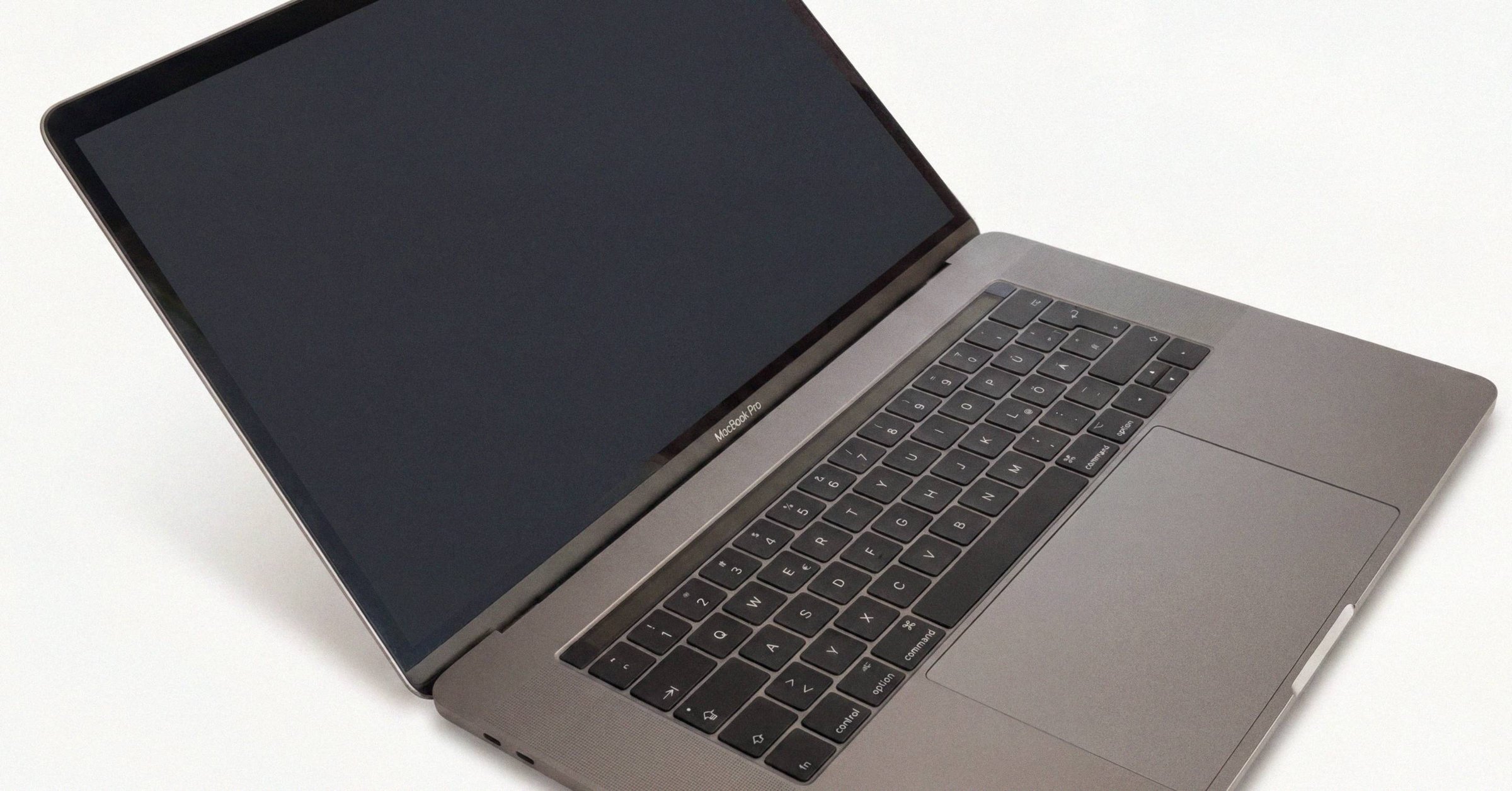
Maxed MacBook Pro resale value: why CTO upgrades depreciate fastest#
A base 16-inch MacBook Pro M3 Max with 36GB of RAM and 1TB of SSD originally cost $3,499 and now sells for $2,100-$2,650 on the used market. The same chassis with 128GB of RAM and 8TB of SSD originally cost $7,199 and now sells for $3,200-$4,200. The extra $3,700 of Apple-charged upgrades recovers roughly $1,100-$1,550 on resale, or 30-42% of the upgrade dollar. The base machine recovers 60-72%. That gap is the CTO upgrade tax, and it is one of the most consistent patterns in the Apple Silicon secondary market.
The mechanism is straightforward. The used market pays primarily for the platform, secondarily for the chip tier, and only weakly for ordinary RAM and SSD upgrades in normal market conditions. Buyers shopping used are solving for "I need an M3 Max 16-inch" or "I need a Studio Ultra," not "I will reimburse every dollar of historic CTO spend." This post walks through the worked numbers, the three reasons the math compresses, the one current exception, and what it means for configuring a new Mac you might eventually resell. The aftermarket pricing reference for every M-series model puts the upgrade tax in the wider context.
The 16-inch M3 Max walkthrough#
The cleanest configuration-by-configuration view is the Late-2023 16-inch MacBook Pro M3 Max line, because it is far enough past launch (30 months in May 2026) that depreciation is well-developed but not yet hitting the year-four terminal decline.
| Configuration | Original price | Used (May 2026) | % retained |
|---|---|---|---|
| Base 16" M3 Pro 18/512 | $2,499 | $1,650-$1,800 | 66-72% |
| 16" M3 Max 36/1TB | $3,499 | $2,100-$2,650 | 60-76% |
| 16" M3 Max 64/2TB | $4,299 | $2,400-$2,950 | 56-69% |
| 16" M3 Max 128/4TB | $5,999 | $2,900-$3,800 | 48-63% |
| 16" M3 Max 128/8TB | $7,199 | $3,200-$4,200 | 44-58% |
Sources: Swappa starting prices and verified sale averages, eBay sold listings (January-May 2026), SellMac buyback matrix, Apple Trade In.
Reading the table from base to fully maxed: $4,700 of additional original price translates to roughly $1,400-$2,400 of additional resale price. The marginal upgrade dollar recovers 30-50%, versus 66-72% on the base machine itself. The recovery rate falls roughly monotonically with each upgrade tier, with the steepest fall on the 4TB and 8TB SSD steps.
Why the math compresses#
Three reinforcing factors drive the pattern.
Apple's BTO pricing carries a 2-4x retail premium over component cost. RAM at Apple's configurator runs around $200/GB. Underlying LPDDR5X has historically been $5-$10/GB before the 2025-2026 shortage. SSD upgrades carry similar markup. The secondary market does not reimburse Apple's margin. It pays closer to utility value: what the marginal capacity is worth to a buyer who could otherwise add external Thunderbolt 5 storage or sit at a slightly lower memory tier.
The buyer pool for a maxed configuration is much smaller. A base 14-inch or 16-inch Pro is mainstream consumer hardware with thousands of weekly buyers. A 128GB/8TB M3 Max is a specialist machine with dozens of buyers in any given week, and the market visibility of those listings is much lower. Thin markets compress prices toward the median willingness-to-pay, not toward the configurator price.
Maxed configurations compete directly against current-generation new releases. The buyer who actually needs 128GB and 8TB is typically a professional with a workload that pushes the hardware. When that professional upgrades, the replacement is usually a current-gen M5 Max, not a used prior-gen maxed unit. The maxed-config secondary market loses its natural buyer to the new-Mac market in a way the base secondary market does not.
The Mac Studio M2 Ultra worked example#
A documented Hacker News account makes the desktop version of the math concrete. A buyer purchased a Mac Studio M2 Ultra fully maxed for around $10,000 at original list. About two years later, they received an Apple Trade In offer of $1,255. An 88% loss on a 24-month-old machine.
The same generation base Studio M2 Ultra 64/1TB at $3,999 MSRP currently sells for $2,300-$2,800 used, which is roughly a 30-35% loss. The base machine lost a third of its value over the same period that the maxed machine lost nearly 90%. The $6,000 in BTO upcharges between the two configurations was effectively destroyed.
Apple Trade In is the lowest-payout channel, so peer-to-peer would have recovered more, but not enough to close the gap. The structural problem is not the channel choice. It is that the marginal $6,000 of CTO spend on the maxed config does not have a secondary market that values it at anything close to original.
SSD upgrades specifically#
The 2023 Mac mini page on Swappa makes this even cleaner. The M2 / 256GB averages around $417 used. The M2 / 512GB averages around $425. The 256-to-512 SSD step adds roughly $200 at the configurator and recovers about $8 on resale.
A 4TB SSD upgrade adds $1,000 or more to MSRP across the M-series lineup. The used market values it at $200-$400 over a 1TB unit. External Thunderbolt 5 SSDs do roughly the same job for $150, which sets a hard ceiling on what buyers will pay for additional internal capacity. The SSD-specific resale pattern covers this tier by tier across the M-series lineup.
The SSD upgrade tax is the most reliable example of the broader pattern, because storage has a near-zero functional substitute (external) that disciplines secondary pricing even more aggressively than memory does.
The one current exception: 2026 high-RAM configs#
There is one important caveat to the upgrade-tax story in May 2026. The late-2025 global DRAM shortage has created a temporary inversion on high-RAM configurations. Memory and storage component costs are up roughly 130% year-over-year, with some LPDDR5X contract prices roughly tripling versus early 2025 (AppleInsider). New high-RAM Macs are either unavailable, shipping six to ten weeks out, or no longer offered.
The result: high-RAM upgrades are recovering above their historical rate.
- 64GB MacBook Pro M3 Max upgrade ($400 original Apple charge) currently worth $300-$400 used, or 75-100% recovery.
- 128GB MacBook Pro M3/M4 Max upgrade ($1,000-$1,200 original) recovering at $700-$1,000, or 60-85% recovery.
- 192GB+ Mac Pro M2 Ultra recovering close to retail.
This is the only meaningful counterexample to the depreciation-tax rule, and it is also the direct mechanism behind the discontinued-512GB-Mac-Studio premium. The high-RAM Mac inversion in detail walks through the asymmetry between RAM and SSD recovery. SSD upgrades have not seen a similar inversion. They still recover at the historical 25-50% rate. If the DRAM shortage eases in late 2026 or 2027, the high-RAM premium will compress and the standard upgrade-tax pattern will reassert itself.
The math on a 14-inch M4 Max#
The pattern holds on portables one generation forward. A 14-inch M4 Max 36GB/1TB at roughly $3,199 retains roughly 75-85% of original price in May 2026 at 18 months. A maxed 14-inch M4 Max 128GB/8TB at roughly $6,899 retains roughly 50-60%. The same compression: an extra $3,700 of CTO spend recovers a much smaller share of dollars than the base.
The exact retention numbers shift with each generation as the DRAM market moves, but the structural gap between base and maxed retention is durable. It has shown up in every Apple Silicon generation that has accumulated enough secondary market data, and it shows up in Intel-era Mac Pro and iMac Pro data going back nearly a decade.
Heuristic recovery rates by upgrade type#
Aggregating across the M-series lineup in May 2026 conditions:
| Upgrade type | Typical recovery on resale | Notes |
|---|---|---|
| Base machine | 60-72% at 30 months | Strong, monotonically decaying |
| Chip tier step (Pro to Max) | 55-70% | Smaller compression than RAM/SSD |
| RAM step (normal years) | 30-45% | The historical tax |
| RAM step (2026 DRAM shortage) | 60-100% | Current temporary inversion |
| SSD step (any year) | 25-50% | Most heavily taxed, external substitute |
| GPU core count step | 40-55% | Niche; only some buyers value the larger GPU |
The chip tier step recovers reasonably well because the secondary market treats Pro and Max as different platforms with different buyer pools. RAM and SSD steps within the same chip tier recover much less because they are seen as add-ons rather than platform changes.
What this means for buyers and configurators#
For a buyer in May 2026, the base or moderately upgraded configuration holds its percentage value better than the maxed config. A 14-inch M3 Pro 18/512 at 67-83% retention is the cleanest current value play in the MacBook Pro lineup precisely because it sits near the bottom of the configurator and benefits from broad buyer demand. The fully maxed 16-inch M3 Max 128/8TB looks impressive on paper but recovers a much smaller share of every dollar past the base.
For a buyer configuring a new Mac with eventual resale in mind, every dollar past the base spec is taxed. The right answer is not to avoid upgrading. It is to upgrade for the work you actually need to do, not because you expect resale to bail you out. A maxed RAM tier in May 2026 happens to recover well because of the DRAM shortage, but the recovery rate on RAM has historically been 30-45% and will revert when supply normalizes. An 8TB SSD has never had a meaningful recovery rate and almost certainly never will.
If you are selling a maxed Mac, peer-to-peer channels (eBay, Swappa, r/AppleSwap) typically pay 60-80% more cash than Apple Trade In, and the spread is largest on high-spec configurations. The channel spread on a Mac Studio M3 Ultra at the high end shows the maxed-config version of this same pattern at $4,000 absolute difference. Apple Trade In's category cap structure compresses payouts across configurations that the secondary market values very differently. A maxed M3 Max and a base M3 Max may receive nearly identical trade-in offers. eBay will not value them the same way, and a private listing will preserve more of the upgrade dollar than any institutional channel.
The cleanest framing: Apple charges you for the marginal capacity. The used market charges your buyer for the platform. The difference between those two pricing models is the upgrade tax, and it is paid on the way out, not on the way in.
Wondering what a Mac is worth right now? See live asking prices for the exact configuration, next to what Apple's trade-in offers.
Related posts
MacBook Pro resale value in 2026: M1 Pro through M5 Max
MacBook Pro resale value across every Apple Silicon generation in May 2026. The Late-2023 M3 cycle retains 67 to 83 percent because Apple dropped the 256GB base SKU. Channel spreads on the 16-inch M3 Max run to $1,250.
MacBook depreciation rate: the Apple Silicon curve, year by year
MacBook depreciation rate on Apple Silicon: median residual is 88% at 6 months, 78% at 12, 58% at 24, and 44% at 48. The full year-by-year curve, three regimes inside it, and where it bends.
Where to sell a MacBook in 2026: Swappa vs eBay vs r/AppleSwap
Where to sell a MacBook for the highest net in 2026, across the three peer-to-peer venues that matter. Fees, buyer protection, and net-to-seller math worked on the same 16-inch M3 Max so the venues compare on one number.
Written by
Priya PatelPriya Patel covers the used-Mac market for Macfax. Before joining she spent six years as a power-seller on eBay, moving roughly 1,200 Macs through the platform and building a private dataset of sale-price-vs-listing-price across every Mac SKU back to 2017. She writes about pricing, buyer and seller behavior across the major marketplaces, and where the secondary market actually clears versus where it's listed.
More posts by Priya →