iMac resale value in 2026: M1, M3, and M4 24-inch prices
iMac resale value across the Apple Silicon 24-inch lineup (M1, M3, M4) in May 2026, plus why the all-in-one form factor narrows the buyer pool and keeps long-tail residuals slightly behind comparable MacBook Air vintages.

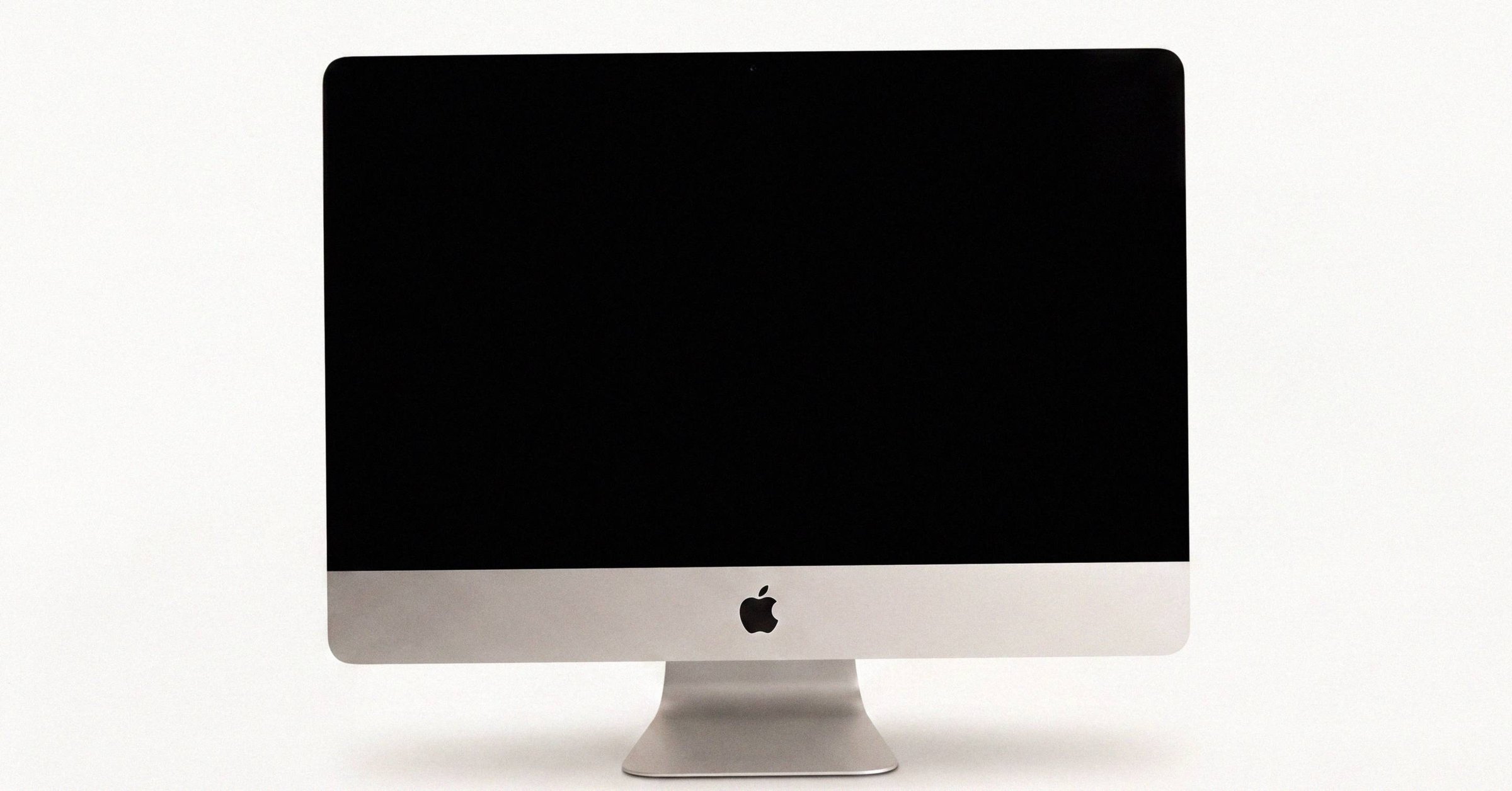
The base 24-inch M1 iMac, released April 2021 at $1,299, now averages $520 to $680 used. The newest 24-inch M4 iMac with 16GB RAM and a 256GB SSD, released October 2024 at the same $1,299 base, is clearing $950 to $1,150. That M4 retention rate, 73 to 88 percent at roughly 18 months, is firm by any historical standard. It is also a few points behind the equivalent-generation MacBook Air, and the reason is structural.
This piece walks through the full Apple Silicon 24-inch iMac lineup as it stands in May 2026, with the channel comparisons that determine how much cash actually lands in a seller's account, and the form-factor mechanics that keep iMac residuals slightly behind comparable Airs. The used Mac pillar guide for 2026 covers the wider market context across every family.
The pricing snapshot#
All figures below combine Swappa average-sale data, eBay sold-listing ranges for "good" to "excellent" condition, and Apple Trade In maximum payouts.
| Model | MSRP | Used market (May 2026) | Apple Trade In max | % retained |
|---|---|---|---|---|
| M1 24" 8/256 (Apr 2021) | $1,299 | $520 to $680 | $300 | 40 to 52% |
| M3 24" 8/256 (Nov 2023) | $1,299 | $700 to $950 | $440 | 54 to 73% |
| M3 24" 16/512 (Nov 2023) | $1,699 | $900 to $1,200 | $560 | 53 to 71% |
| M4 24" 16/256 (Oct 2024) | $1,299 | $950 to $1,150 | $600 | 73 to 88% |
| M4 24" 24/512 (Oct 2024) | $1,899 | $1,300 to $1,550 | $750 | 68 to 82% |
The percentages span a range because there are two divergent benchmarks for each row: the average verified Swappa sale and the higher end of eBay sold-listing prices for the same configuration in "excellent" cosmetic grade. A clean-cosmetic eBay sale typically clears 10 to 20 percent above the Swappa average for the same SKU.
Why the iMac trails the Air#
The cleanest way to see the iMac retention drag is to put the M3 generation side by side. The 13-inch M3 MacBook Air shipped at $1,099 in March 2024. The 24-inch M3 iMac shipped at $1,299 in November 2023. Eighteen months in, the Air is retaining 64 to 72 percent of MSRP. The iMac is retaining 54 to 73 percent. The top of the iMac band is comparable, but the bottom is roughly ten percentage points lower.
The mechanism is the all-in-one form factor. A buyer shopping for a non-laptop Apple Silicon Mac has two practical paths.
The first path is the iMac: one cable to the wall, a 4.5K Retina display already attached, integrated webcam and speakers, and a matching keyboard and mouse in the box. The aesthetic is unified. The setup is essentially zero. The buyer cannot upgrade the display later without buying a new computer.
The second path is the Mac mini plus an existing display. The mini at $599 to $1,399 covers the same compute range, the buyer reuses whatever 4K or 5K panel they already own, and the display can be upgraded independently. The mini also has more ports, a smaller desk footprint when shoved out of sight, and a meaningfully lower entry price.
Buyers who actively want the iMac form factor are choosing it on aesthetics and on the integrated display. That is a real audience, but it is narrower than the audience for a Mac mini or for a MacBook Air. A narrower buyer pool produces softer prices, and the softening is consistent across both new-market positioning (the iMac is the only iMac line Apple makes; there is no 27-inch or Pro variant anymore) and across the secondary market.
The non-detachable display also caps long-tail residuals. A four-year-old MacBook Air can be sold to a buyer who wants a portable. A four-year-old Mac mini can be sold to a buyer who already has a display. A four-year-old iMac is selling a display attached to four-year-old silicon, and as that silicon ages out of usefulness the display becomes the only remaining value, against a buyer who could have bought a fresh 27-inch 4K panel for less than the iMac's used price.
The M1 floor#
The 2021 M1 iMac is the test case for what happens when an Apple Silicon all-in-one ages four years. Average-sale prices have settled at $520 to $680 against the $1,299 launch price. That is 40 to 52 percent retention at month 49.
Three things are holding the floor where it is.
The M1 is still receiving macOS updates. Apple's typical macOS support window runs six to seven years post-release, so the M1 line is expected to remain a current-OS target through roughly 2027 to 2028. A buyer paying $550 for a working M1 iMac is buying two to three more years of supported life.
The 24-inch display is genuinely good. The 4.5K Retina panel at 4480 by 2520 with P3 color matches or exceeds most third-party monitors at the $400 to $500 price point. Anyone buying an M1 iMac is also buying the panel, and the panel is worth something on its own terms.
The M1 base 8GB configuration is the practical floor on usability. The newer M3 and M4 iMacs both ship at 8GB base as well, and a thoughtful buyer rejects 8GB on Apple Silicon for sustained work. That makes the M1 8/256 less of a downgrade relative to current entry-level iMacs than the chip generation alone would suggest.
The configurations to avoid as a buyer at this vintage are the 8/256 base if you intend to use the machine as a daily driver for anything more than light browsing. The 16GB BTO upgrade was uncommon at retail and is rare on the secondary market, but worth paying for when it appears.
The M3 storage step#
The M3 line shows the standard Mac pattern: the secondary market values the storage upgrade poorly. The 24" M3 8/256 averages around $700 to $950. The 24" M3 16/512, originally $400 more at retail, averages $900 to $1,200. The premium for the higher tier in resale is roughly $200, against an original Apple charge of $400.
This is consistent with the broader rule: ordinary RAM and SSD upgrades recover only 30 to 50 percent of their original Apple-charged premium on resale. External Thunderbolt SSDs do roughly the same job for less, and the secondary buyer either has one already or can buy one for less than the difference. The iMac is not exempt from this rule.
The exception worth noting is RAM, where the 2025 to 2026 DRAM shortage has temporarily inverted the depreciation tax on higher-memory configurations. The iMac line is less affected than the Mac Studio or MacBook Pro because iMac CTO RAM caps are lower (24GB on the M4, 16GB on the M3), but a 16/512 M3 iMac is retaining slightly better against the 8/256 base than the historical curve would predict.
The M4 retention anomaly#
The M4 iMac is holding 73 to 88 percent of MSRP at the 18-month mark. For context, the broader Apple Silicon depreciation curve puts an 18-month iMac around 68 percent retained. The M4 is running 5 to 20 percentage points above the curve.
Two reinforcing factors produce the firmness.
The first is the broader 2026 inversion. Residual values in dollar terms are running roughly 3 to 6 percent higher year over year on equivalent vintages, driven by DRAM and NAND cost inflation that has put a floor under Apple's own new pricing. Used prices have nowhere to soften.
The second is that Apple's last meaningful iMac refresh was the M4 in October 2024. There is no M5 iMac yet, and the line has been historically slow to refresh. The M3 launched in November 2023; the M4 followed eleven months later; an M5 in late 2026 is plausible but not announced. While the M4 is the current-shipping iMac at $1,299, used M4 iMacs face no successor pressure on price. That changes the moment Apple announces an M5 refresh.
Channel selection on an iMac#
Channel spreads on an iMac are narrower than on a MacBook Pro and wider than on a Mac mini, with a meaningful local-pickup premium because the machine is heavy, awkward to ship, and fragile in transit.
For the M3 24" 16/512 as a representative case:
| Channel | Approximate payout (May 2026) |
|---|---|
| Apple Trade In | $560 (Apple gift card credit only) |
| Best Buy trade-in | $470 to $500 |
| Decluttr / Gazelle | $650 to $750 |
| Specialist Mac buyers (SellMac, ItsWorthMore) | $720 to $850 |
| Swappa net to seller | $850 to $1,000 |
| eBay net after fees (shipped) | $830 to $1,050 |
| Facebook Marketplace / Craigslist (local) | $950 to $1,200 |
| Reddit r/AppleSwap net | $900 to $1,100 |
The Apple Trade In to peer-to-peer spread is 60 to 100 percent. The Apple Trade In versus eBay walkthrough covers the math on the spread. Apple's stated policy is that exact trade-in values depend on model, configuration, and condition, with a serial number required for an accurate quote (Apple Trade In). The published category caps are upper bounds that many devices do not qualify for after inspection.
The iMac is the one Mac category where local cash sales often beat eBay net. Shipping a 24-inch iMac safely requires the original box (which most owners discarded), substantial padding, and roughly $40 to $80 in ground freight. Damage in transit is a real risk, and buyers know it. A local Facebook Marketplace or Craigslist sale with cash and a hand-off avoids those costs and risks entirely, and frequently nets 5 to 15 percent more than the shipped equivalent.
For sellers in a major metro area, the practical sequence is: list locally on Facebook Marketplace and Craigslist at the upper end of comparable sold listings, hold for two weeks, and only fall back to a shipped eBay or Swappa listing if local demand fails to materialize.
What this means if you are pricing one#
For an M1 iMac in good cosmetic condition, the realistic peer-to-peer price is the Swappa average plus 5 to 10 percent if the cosmetic condition is genuinely excellent and the keyboard and mouse are present and undamaged. The Apple Trade In number is a floor reference, not a target. The buyback services sit roughly halfway between those two.
For an M3 or M4 iMac, prices are firmer than the historical curve would predict, which is favorable to sellers and difficult for buyers. If you are buying, the M3 24" 16/512 at $900 to $1,200 is the current value sweet spot in the iMac lineup: a 4.5K Retina display, current macOS support through roughly 2030, and enough RAM and storage for sustained work.
Two iMac-specific factors move the number that do not apply to laptops. The first is the keyboard and mouse: the matching Magic Keyboard and Magic Mouse in matching colors are worth $80 to $150 at resale, and listings without them sell 5 to 10 percent below comparable bundles. The second is display condition: pressure marks, stuck pixels, or backlight bleed knock 10 to 20 percent off the price regardless of how clean the chassis is. Buyers reading a listing are zooming in on the display before they look at anything else.
The configurations to avoid as a buyer, in any generation: 8GB RAM and 256GB SSD together. The combination is functionally constrained for sustained modern workflow on an iMac just as it is on a MacBook Air, and the used market reflects it. A 16GB or 24GB model with 512GB or more holds value better in percentage terms and is materially more useful day to day.
Wondering what a Mac is worth right now? See live asking prices for the exact configuration, next to what Apple's trade-in offers.
Related posts
Maxed MacBook Pro resale value: why CTO upgrades depreciate fastest
Maxed MacBook Pro resale value: a fully upgraded 16-inch M3 Max recovers 30-42% of its CTO upgrade premium on resale, versus 60-72% on the base machine. The used market pays for platform and chip tier, not ordinary RAM and SSD upgrades.
Where to sell a MacBook in 2026: Swappa vs eBay vs r/AppleSwap
Where to sell a MacBook for the highest net in 2026, across the three peer-to-peer venues that matter. Fees, buyer protection, and net-to-seller math worked on the same 16-inch M3 Max so the venues compare on one number.
The 512GB M3 Ultra Mac Studio: a discontinued-capability premium
The 512GB M3 Ultra Mac Studio was discontinued in March 2026. Verified secondary sales now clear from $9,500 sealed to over $21,000, because no other consumer machine can hold a frontier-class local LLM in one box.
Written by
Priya PatelPriya Patel covers the used-Mac market for Macfax. Before joining she spent six years as a power-seller on eBay, moving roughly 1,200 Macs through the platform and building a private dataset of sale-price-vs-listing-price across every Mac SKU back to 2017. She writes about pricing, buyer and seller behavior across the major marketplaces, and where the secondary market actually clears versus where it's listed.
More posts by Priya →